Home / Articles
Vision Correction Without Lasers: Is ICL or Ortho-K Better for You?
Home / Articles
Vision Correction Without Lasers: Is ICL or Ortho-K Better for You?
It often starts with a small moment — a young professional in Gangnam rubbing their eyes after a long day in front of multiple monitors, or a student in Seoul realizing their nighttime vision seems softer than it used to be. Not everyone feels ready for laser vision correction like SMILE Pro or LASIK, and that’s perfectly understandable. Some people are too young. Others have thin corneas, dry eyes, or simply prefer a reversible option.
At GS Eye Center, where we’ve treated patients for over 20 years, questions about these options come up nearly every day. And while both can dramatically improve vision, they work in fundamentally different ways — and fit very different lifestyles.
This article will walk you through what each method is, why someone might prefer one over the other, and how specialists evaluate your eyes to determine the safest path forward.
Not everyone is ready for corneal reshaping. In Korea, laser procedures like SMILE Pro are extremely popular among office workers, students, and even military personnel because of the quick recovery and precision. But patients also come in with concerns such as:
“My corneas are too thin — can I still fix my vision?”
“I’m only 16. My prescription is still changing.”
“I’m worried about dry eyes after laser surgery.”
“I want something reversible.”
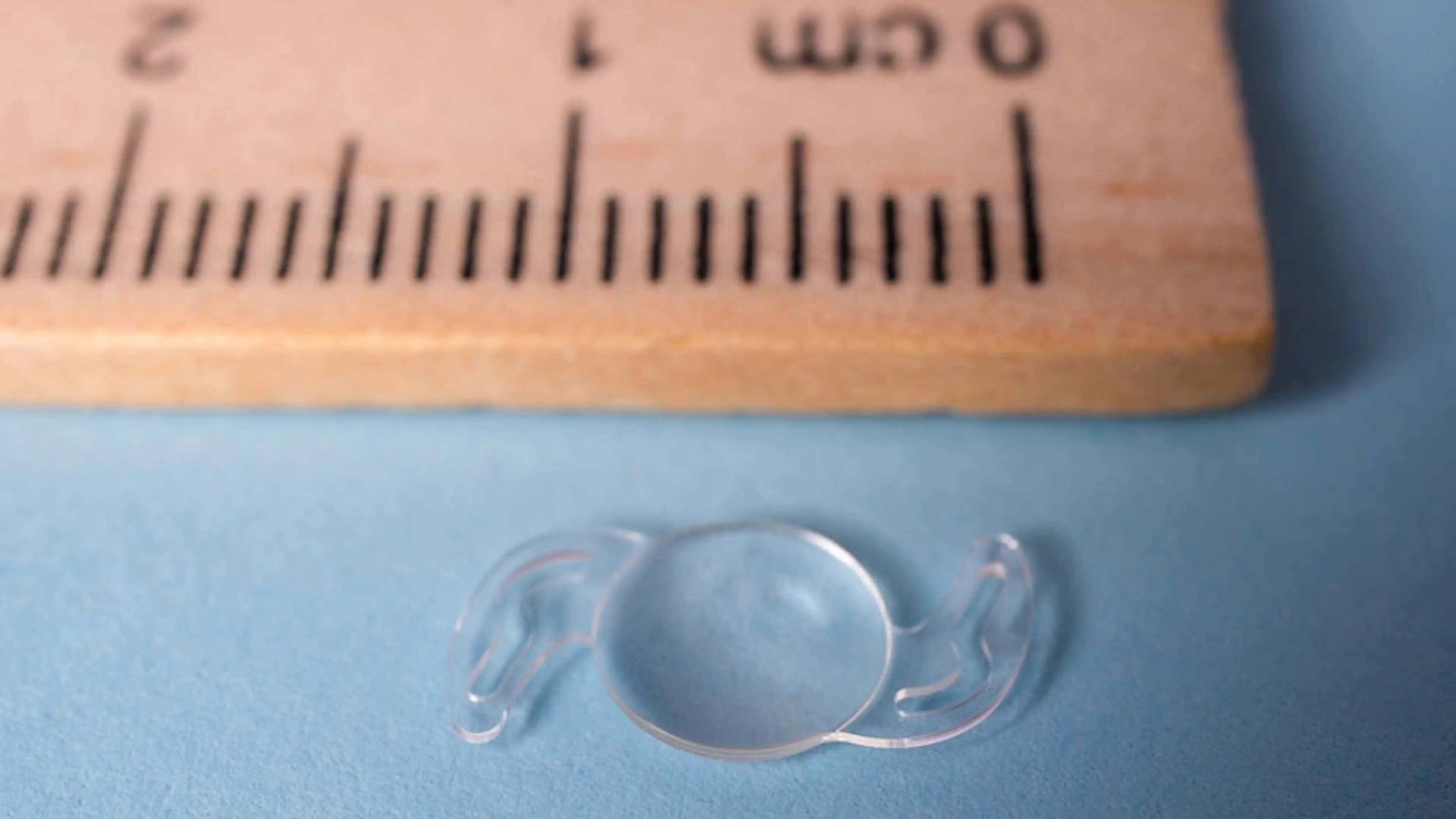
If laser vision correction is like sculpting the surface of a camera lens, ICL is more like adding a new, perfectly crafted lens inside the camera body.
No corneal reshaping
No removal of tissue
Fully reversible
Think of it as wearing the best possible contact lens — except it sits inside the eye, stays clean, never dries out, and delivers consistently sharp vision.
At GS Eye Center, we often recommend ICL for patients who:
Need excellent night vision clarity for work or study
Many high-myopia patients tell us that ICL gives them the “clearest vision they’ve ever experienced,” especially in low-light conditions. To be honest, most first-time ICL patients are surprised by how quickly they recover and how natural their vision feels within days.
Most patients return to office work within a few days. Night clarity continues improving over several weeks.
Ortho-K works in almost the opposite way. Instead of implanting a lens, it gently reshapes the cornea overnight using specialized rigid contact lenses.
You wear custom, oxygen-permeable lenses while sleeping. During the night, the lenses temporarily flatten the central cornea. By morning:
You remove the lenses
Vision becomes clearer for 12–48 hours
No daytime lenses needed
It’s similar to how orthodontic retainers hold teeth in a new position — except here we’re shaping the cornea in a reversible, non-surgical way.
Ortho-K is a popular choice in Korea among:
Individuals with mild to moderate myopia (usually up to –5.00D, sometimes –6.00D depending on corneal shape)
In pediatric care, Ortho-K has become one of Korea’s most trusted tools for myopia control. Many families come to us after hearing from friends whose children avoided worsening eyesight thanks to consistent Ortho-K use.
To understand which option is better for you, it helps to imagine what your daily routine would look like with each method. Patients often overlook this practical angle until we walk them through it during consultation.
Vision is stable from morning to night.
No need for lenses, solutions, or nightly routines.
Great for people who want a “set it and forget it” solution.
Requires nightly lens wear — consistency is crucial.
If you skip a night, your vision may blur the next day.
Works best for people who can commit to the routine.
Excellent clarity, especially for high myopia
Sharp night vision
Consistent focus even after long computer hours
Works for moderate to extremely high prescriptions
Best results for mild to moderate myopia
Night vision can be slightly softer for some patients
Vision may fluctuate early in the adaptation stage
At GS Eye Center, we sometimes compare the two like this:
“ICL gives you a premium camera lens. Ortho-K gives you a flexible lens that works beautifully — as long as you maintain it correctly.”
Both ICL and Ortho-K are reversible — but in different ways.
A lens is implanted, but it can be removed later if needed.
No tissue is cut or removed.
Long clinical history with excellent safety outcomes when screened properly.
Lens wear stops → cornea returns to natural shape within days.
No surgery involved.
However, nightly lens hygiene is essential to minimize infection risk.
Not recommended for children or early teens
Suitable starting from early adulthood once refraction stabilizes
Safe with proper care and monitoring
A preferred choice for families who want a non-surgical solution
In Korea, where academic demand and near-work hours are high, we see many young patients whose prescriptions change rapidly. Ortho-K often helps slow that trajectory.
“It feels like I got my natural eyesight back.”
“Everything is so clear, especially at night.”
“I don’t have to think about my eyes anymore.”
“It’s amazing to wake up with clear vision.”
“The first two weeks were the hardest.”
“I love that I don’t have to do surgery.”
Both groups are satisfied — but for different reasons. The key is aligning expectations with lifestyle.
At GS Eye Center in Gangnam, our diagnostic protocol includes:
Corneal thickness & curvature mapping
Anterior chamber depth
Endothelial cell density
Tear film evaluation
Pupil size
Overall refractive stability
Age and myopia progression history
These measurements allow us to answer questions like:
Is the cornea thick enough for Ortho-K reshaping?
Is the eye deep enough to safely hold an ICL lens?
Is the patient old enough or stable enough for ICL?
Will Ortho-K provide sufficient clarity for school or work?
Here’s a simplified way to think about it:
The sharpest, most stable vision possible
A long-term but reversible solution
Clear night vision
Freedom from any daily lens care
Temporary, adjustable shaper lenses
A safe option even if your prescription is still changing
Daytime freedom from glasses or contacts
If you’re an adult with stable high myopia, ICL tends to be the more reliable, comfortable, and high-definition solution. Many of our high-myopia professionals — programmers, designers, financial analysts — prefer the stability and detail that ICL provides.
If you’re a parent worried about your child’s increasing myopia, Ortho-K is often the best first step. It’s non-invasive and helps slow down progression during a critical period of eye development.
Sometimes, patients even begin with Ortho-K in childhood and transition to ICL once they become adults — a path we commonly guide families through.
Choosing between ICL and Ortho-K is not about which method is “better.” It’s about which method aligns with:
Your age
Your corneal structure
Your prescription
Your occupation and lifestyle
How much maintenance you’re willing to commit to
Whether your vision is stable or still changing
At GS Eye Center, we believe the best vision correction plan is the one that respects both your medical safety and your everyday life.
If you’re unsure which pathway fits you, consider booking a vision evaluation at a specialized center like ours in Gangnam. With comprehensive diagnostics and a patient-first approach, we’ll help you understand your options clearly — and choose the one that gives you confidence, comfort, and clarity.