Home / Articles
Top 5 Questions Patients Ask Before Eye Surgery – Answered by Surgeons
Home / Articles
Top 5 Questions Patients Ask Before Eye Surgery – Answered by Surgeons
It often starts with something small: a young professional in Gangnam removing their dry contact lenses during a late-night work session… a frequent traveler realizing their glasses fog every time they step out of the airport… or a parent in their 50s noticing that restaurant menus have become strangely difficult to read.
After two decades of clinical practice in Seoul, here are the questions surgeons hear most often — explored not as checkboxes, but as windows into what patients fear, hope for, and need to make confident decisions.
This is almost always the first question, even if patients phrase it differently. Some say, “My eyes are precious — I don’t want to take risks.” Others whisper, “I heard someone wasn’t eligible for LASIK. What if that’s me?”
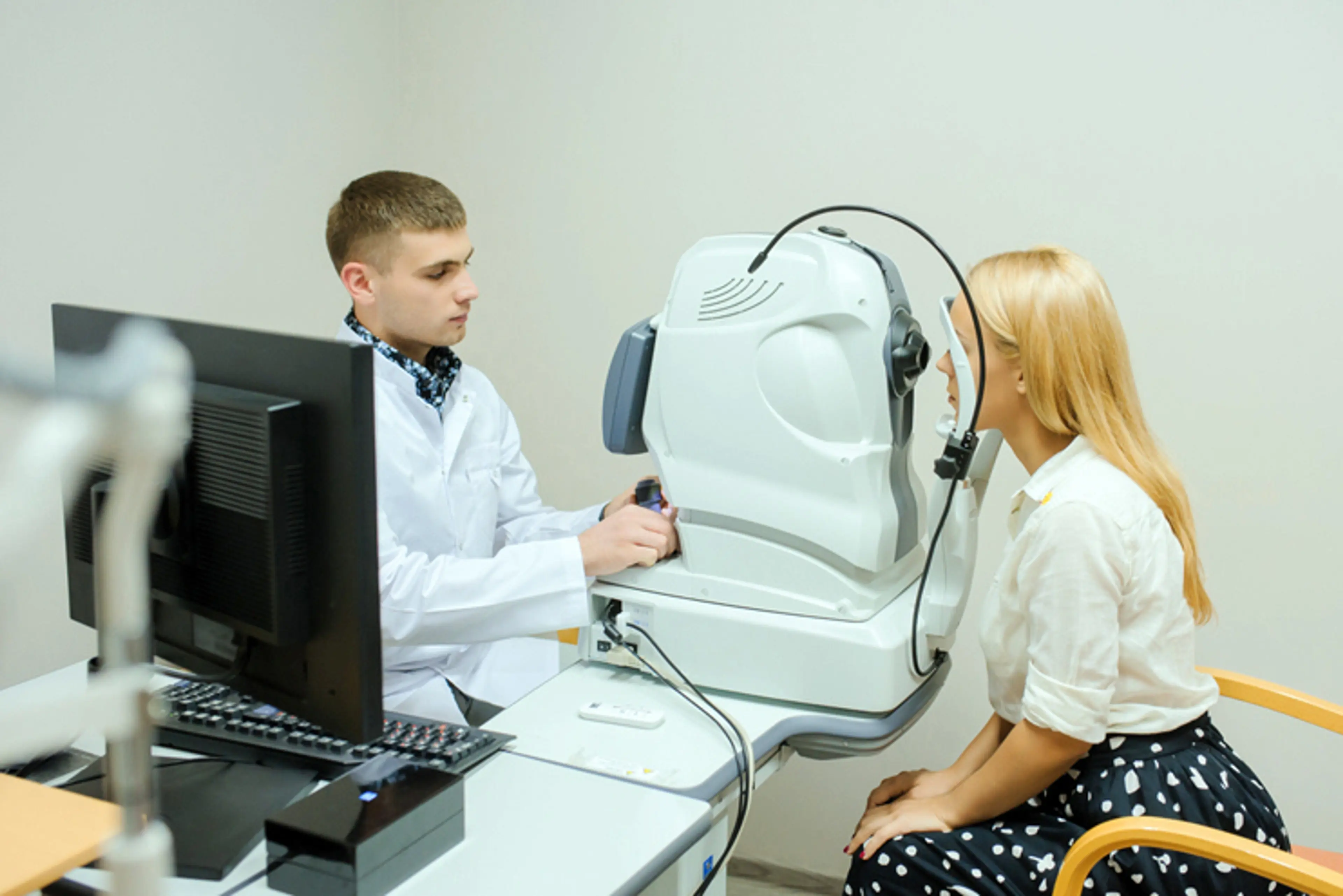
Today’s preoperative testing is not a simple vision check. It involves analyzing:
Corneal thickness and microscopic structure
Tear film stability
Shape irregularities invisible to the human eye
Early signs of keratoconus
Lens transparency and subtle cataract development
Retinal health and peripheral weak spots
It’s similar to assessing the frame of a house before renovation. The more thoroughly you study the foundation, the more confidently you can work on it.
Patients rarely fear the laser — they fear the unknown feeling of it. Some imagine a bright flash like a camera, others picture surgeons “cutting,” which understandably makes them tense.
Here's what people typically experience:
Lens implant patients often ask a different variation of this question, since the idea of a lens being placed inside the eye can sound intimidating. Yet modern intraocular lens surgery is one of the most refined procedures in medicine. It relies on ultrasound precision and micro-incisions so small they can self-seal. Many describe the sensation as “nothing more than seeing light and shadows,” not pain.
To be completely honest, the surgery itself is rarely the difficult part. Anxiety before the procedure is what patients remember most. Which is why at GS Eye Center, we structure the surgical day to be calm — unrushed briefing, gentle communication, step-by-step updates — a rhythm that helps the body relax naturally.
This question often arises from practical concerns: a teacher who needs to return to class, an office worker preparing for year-end projects, a bride with a wedding in three weeks. Vision isn’t only medical — it’s social, professional, emotional.
The recovery timeline depends on the procedure, but the nature of modern Korean ophthalmology is speed and precision.
Presbyopia-correcting and high-myopia lens implants require a different recovery mindset. Vision improves immediately, but the brain also needs time to adapt to the new optical system. Most people feel surprisingly good after the first 24 hours, but crisp stabilization continues over days or weeks.
Cataract patients in particular often call it “a world turning bright again.” Removing a cloudy natural lens and replacing it with a clear artificial one is, in many ways, like swapping out a foggy camera lens for a premium new optic.
Even when patients trust the technology, they worry about the small possibility of complications. It’s a natural human instinct — our eyesight is tied deeply to independence and identity.
Surgeons at GS Eye Center approach this question scientifically but empathetically. Instead of offering generic reassurance, we explain how risks are actively minimized at each stage of care.
Dr. Kim Moo-Yeon and our team have spent decades refining technique beyond what textbooks describe. Korean surgeons, especially those practicing in high-volume centers like Gangnam, gain extensive experience navigating complex corneal shapes, ultrahigh myopia cases, and post-contact-lens dry eye. This cumulative experience drastically reduces intraoperative surprises.
Wavefront aberrometry, biomechanical mapping, and real-time laser tracking allow us to foresee optical issues before they occur. In lens surgery, modern biometry and AI-powered calculations make postoperative refractive surprises increasingly rare.
Patients sometimes imagine that surgery is the end of the journey, but in reality, healing is a guided process. At GS Eye Center, follow-ups are not just quick checks — they include surface stability assessments, tear osmolarity analysis, retinal scans, and functional vision testing. This early detection approach keeps minor issues from becoming real concerns.
When we speak openly about these safeguards, patients often say, “I didn’t realize how much invisible work goes into ensuring it goes well.” That understanding replaces fear with trust.
This question reflects a modern shift: patients arrive more informed than ever, but also more confused. They’ve watched videos, compared clinics, and heard conflicting advice from coworkers. But choosing a procedure is not like choosing a product — it’s selecting the right optical philosophy for your eyes.
Here’s how surgeons think through it:
We recommend SMILE Pro for individuals who want fast recovery, minimal dry-eye risk, and a lifestyle-friendly solution. Many Korean professionals choose it because they cannot afford long downtime and prefer a flap-free method that keeps the cornea structurally strong.
SMILE Pro is particularly helpful for:
High screen-time workers
People with active lifestyles or sports
Those with mild to moderate dry eye tendencies
Patients seeking the gentlest corneal option
There is a moment in every person’s life — often between ages 40 and 55 — when laser correction alone no longer solves the reading problem. If near vision has started slipping, a lens-based solution may prevent patients from going through separate surgeries later.
Lens implants are favored for:
Presbyopia (difficulty reading up close)
Extreme myopia or hyperopia
Early lens clouding not yet classified as cataract
Patients wanting long-term stability without future laser enhancements
At GS Eye Center, we take time to show patients their own images — their corneal map, their lens density, their retinal layers. When they see the anatomy themselves, the decision becomes clear, almost intuitive.
Patients often tell us afterward, “I thought I needed LASIK, but now I understand why SMILE Pro (or a lens implant) was better for me.” That clarity is our goal.
When you distill all these questions, what people truly seek is not medical jargon — it’s reassurance that their eyes will be cared for with precision and humanity.
At GS Eye Center, that has been our philosophy for more than 20 years. Under the leadership of Dr. Kim Moo-Yeon and our team of seven board-certified ophthalmologists, we’ve built a model of vision care that is technologically advanced yet deeply patient-centered. Every procedure — from SMILE Pro to premium lens implants — is shaped by thorough diagnostics, meticulous technique, and a calm, supportive environment.
And if you’re in Seoul — or planning a visit — GS Eye Center in Gangnam is always ready to guide you through that discovery with clarity and care.