Home / Articles
Office Workers: How to Combat Vision Fatigue From Screens
Home / Articles
Office Workers: How to Combat Vision Fatigue From Screens
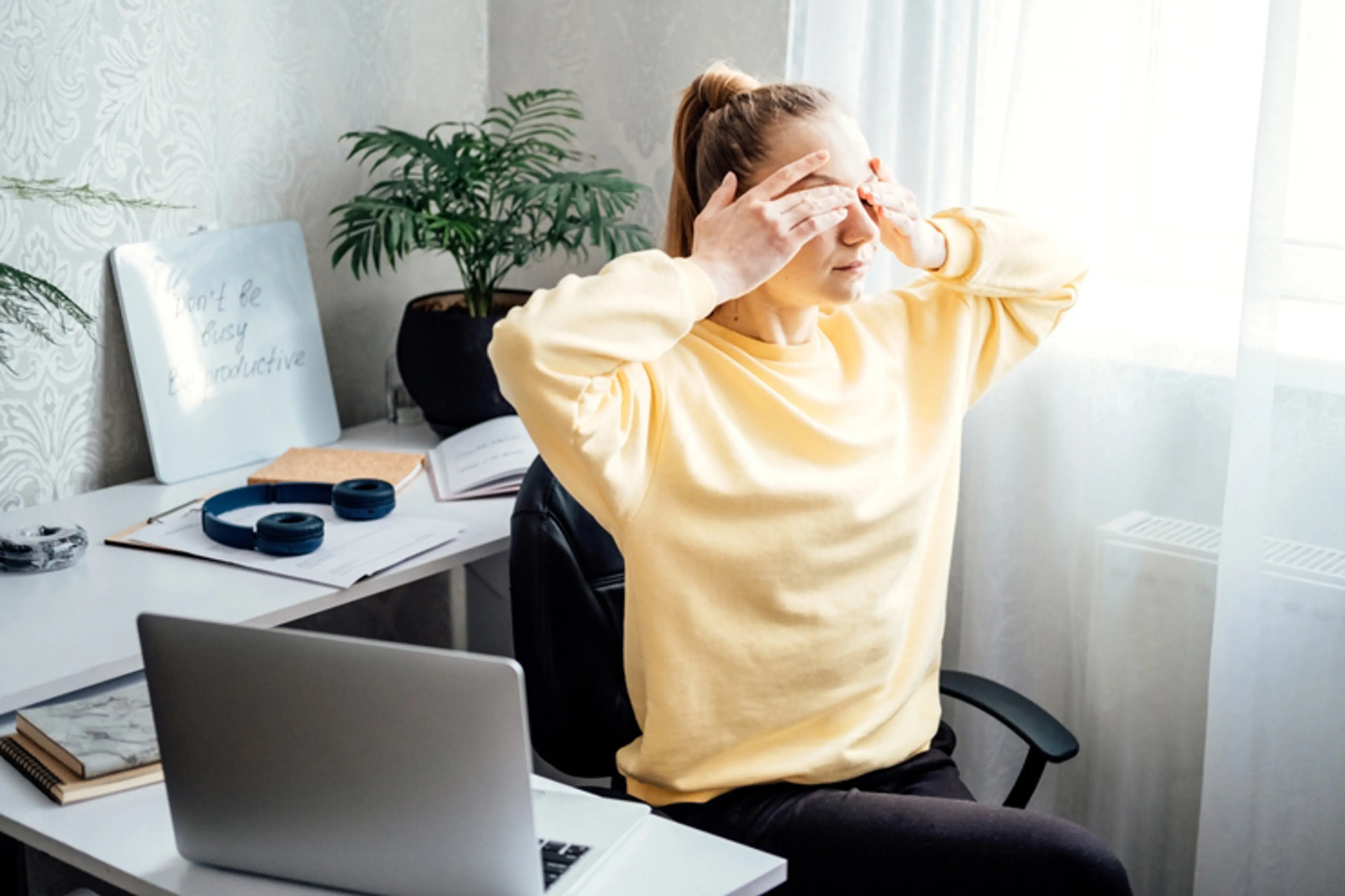
Human eyes were not designed for 10-hour days of focusing on glowing rectangles. When you look at a screen:
Your blink rate drops by almost half, causing dryness and irritation.
Constant near-focus makes eye muscles work overtime, leading to fatigue.
Glare, poor posture, and blue light exposure add additional stress.
In Korea, where high work intensity and long office hours are common, digital eye strain has become a major health concern. Patients often assume that discomfort is just “part of the job,” but over time, unaddressed strain can affect productivity, sleep quality, and even long-term vision health. What many don’t realize is that the combination of screen-heavy lifestyles and indoor work environments — air conditioning in the summer, heating in the winter — further dries out the eyes, compounding the problem.
Vision fatigue rarely appears all at once. Most patients notice subtle changes:
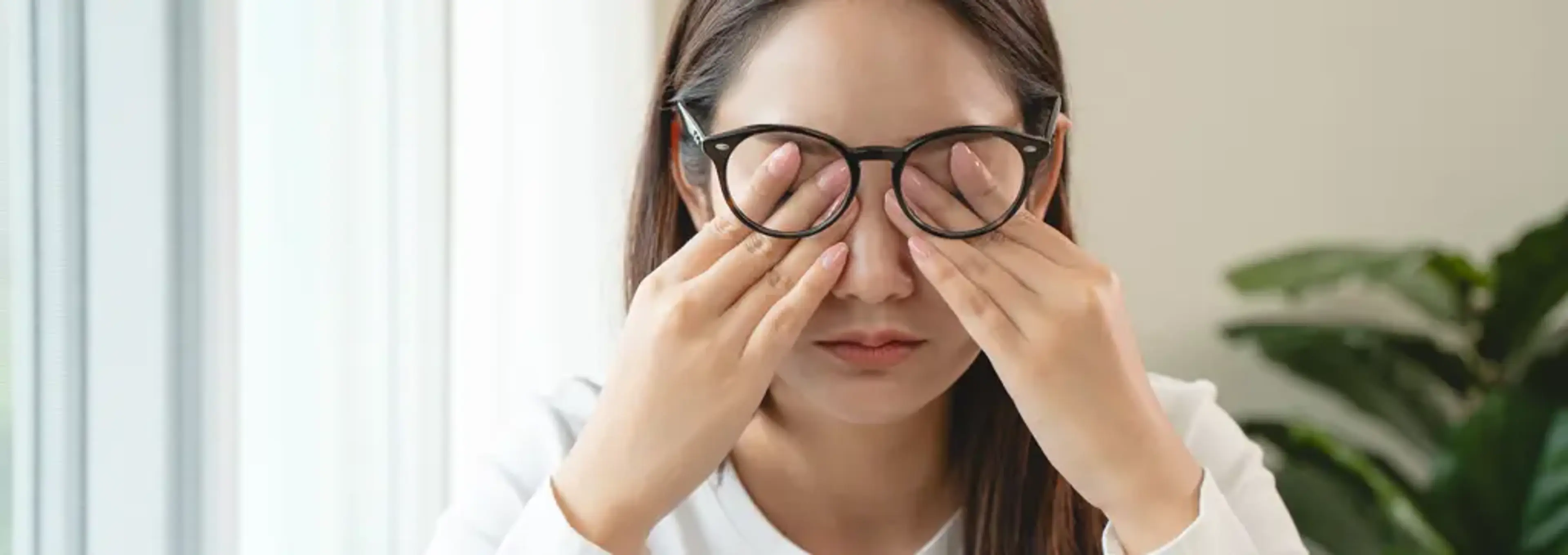
Dryness, burning, or a gritty sensation
Difficulty focusing after prolonged work
Headaches centered around the eyes or temples
Blurred or double vision
Neck and shoulder tension from poor ergonomics
Over time, some even develop increased light sensitivity or feel as if their eyes “ache” by the end of the day. These symptoms don’t just reduce comfort — they can impact work efficiency, reading speed, and even emotional wellbeing. Many young professionals brush off these signs, but they are the body’s way of signaling stress. At GS Eye Center, we remind patients that eye health is just as essential to performance as mental focus and physical stamina.
To combat vision fatigue, small daily habits often matter more than expensive gadgets. A few evidence-based strategies include:
Every 20 minutes, look at something 20 feet away for at least 20 seconds. This relaxes the ciliary muscle inside the eye, which otherwise remains locked in near-focus mode. Think of it like stretching between sets at the gym — a reset for your eyes.
It may sound strange, but consciously reminding yourself to blink helps replenish the tear film that protects the cornea. Patients who practice this often report less dryness and irritation. Some even set small reminders on their computer or phone as a cue to “refresh” their eyes.
Keep monitors at arm’s length, with the top of the screen at or slightly below eye level.
Reduce glare with blinds, curtains, or an anti-reflective filter.
Adjust brightness so the screen matches ambient light — too bright or too dim both strain the eyes.
Consider a secondary monitor setup if you regularly toggle between documents to minimize unnecessary eye and neck movements.
Preservative-free lubricating drops provide relief from dryness. At GS Eye Center, we often recommend them for office workers who experience frequent burning or irritation. The key is consistency: using drops proactively rather than waiting until discomfort is severe.
Blue light is not inherently harmful at screen levels, but it can disrupt circadian rhythm. Limiting screen use before bedtime or using warm-light settings in the evening may help with sleep quality. Patients who travel frequently for work often find this especially useful in minimizing jet lag.
Eye strain is closely linked with neck and back tension. Poor posture while working at a computer can create a feedback loop of muscular stress and visual discomfort. Adjusting chair height, using a supportive backrest, and ensuring feet are flat on the ground all contribute to better visual comfort.
Not all cases of digital eye strain come down to screen habits alone. Sometimes, underlying eye conditions amplify the problem:
At GS Eye Center, we’ve seen patients who assumed their fatigue was “just normal” for office work, but after a diagnostic exam, they discovered an easily correctable issue.
Lifestyle adjustments solve most mild cases of vision fatigue. However, persistent symptoms may indicate underlying conditions such as dry eye syndrome, uncorrected astigmatism, or early presbyopia. For example, some patients in their late 30s and 40s discover that their eye strain is less about screen time and more about the natural loss of near vision.
At GS Eye Center, we perform detailed diagnostic testing — from tear film analysis to wavefront corneal mapping — to identify whether discomfort stems from digital habits alone or from a correctable condition. In some cases, specialized treatments like punctal plugs for dry eye, prescription updates, or lens-based procedures for presbyopia are recommended.
Dr. Kim Moo-Yeon, our medical director and former professor, emphasizes the importance of taking a personalized approach. No two eyes are the same, and understanding the exact mechanics of a patient’s visual system allows us to recommend solutions that improve not only comfort but long-term vision health.
Korea’s professional culture often demands long hours, multitasking, and frequent digital communication. Many young professionals also spend significant time on smartphones during commutes and breaks, adding hours of near-focus to their daily routine. This “double exposure” — office computers by day, mobile screens by night — accelerates the onset of eye fatigue.
We often meet patients who work in finance, technology, or design, industries where concentration and precision are critical. They are often surprised to learn that small ergonomic changes and proactive eye care can prevent the cycle of daily discomfort. In fact, several of our international patients traveling to Seoul for business consultations have remarked on how common screen-related complaints are among their Korean colleagues.
Vision fatigue is not a permanent condition, but it is a warning sign. The earlier you adopt healthy screen habits, the better your long-term eye health will be. Ignoring symptoms now can accelerate conditions like chronic dry eye or worsen the impact of uncorrected refractive errors later.
If you’ve been struggling with tired, blurry, or irritated eyes despite making adjustments, it may be time for a professional evaluation. A quick consultation can reveal whether you simply need to refine your daily routine or if an underlying condition requires treatment.
At GS Eye Center in Gangnam, our team of seven board-certified ophthalmologists — led by Dr. Kim Moo-Yeon, a globally recognized expert in vision correction and cataract surgery — is dedicated to helping office workers and busy professionals restore clarity and comfort. Whether through lifestyle guidance, precision diagnostics, or advanced treatment options, we focus on solutions that fit your daily life.